الأربعاء، 17 يونيو 2026

09:30 م

العلاج بين يديك.. هل يقي "تمرين الخنصر" من الزهايمر في 17 ثانية؟

تمرين الخنصر

تمرين الخنصر

هل يمكن أن يكون علاج الزهايمر وضعف الذاكرة بسيطًا لدرجة أن يكون بين يديك، هذا ما يدعيه مستخدمو منصات التواصل عن "تمرين الخنصر"، حيث تتشابك الأصابع بطريق معينة لثوانٍ معدودة، فهل يثبت العلم صحة التمرين أم ينفيه؟.

طريقة عمل تمرين الخنصر

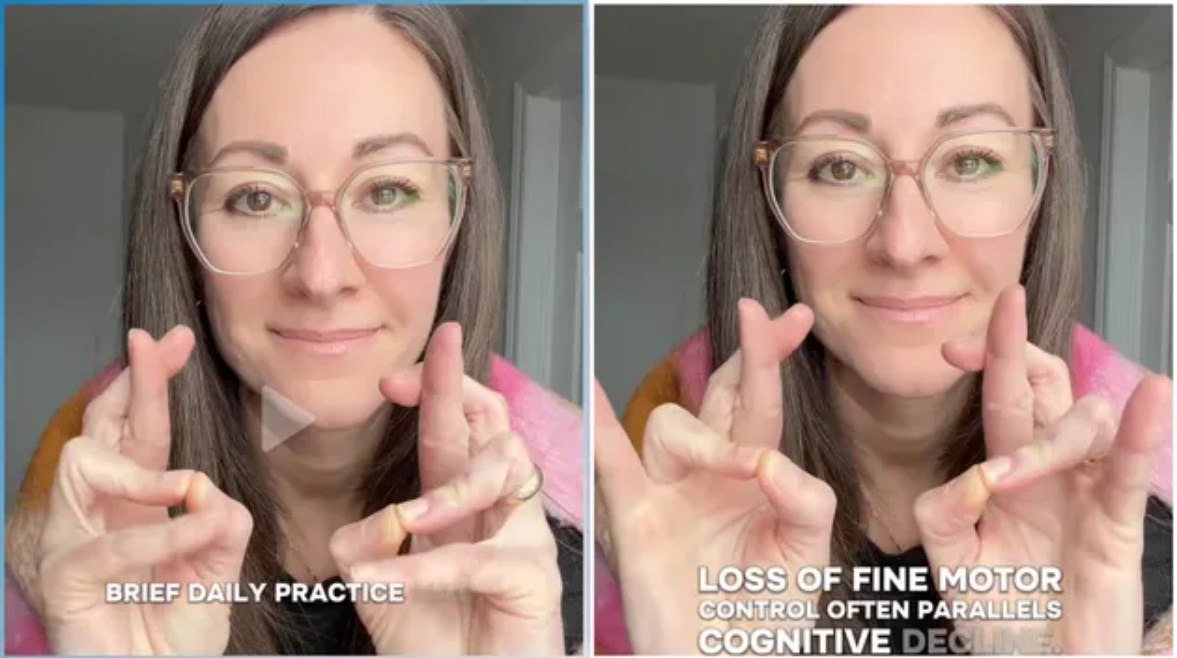
التمرين هو أن تضع يديك أمامك بحيث تكون راحتا يديك متقابلتين، ثم تُشبك إصبعي السبابة والوسطى، وتلامس إصبعي البنصر والإبهام معًا، وتحرك خنصرك لأعلى ولأسفل لعدة ثوانٍ.

@keepingyouinstitches2023 Pinky Movements & Brain Health: What the Science Says: a simple exercise where you touch your ring finger and thumb together while wiggling your pinky up and down. Proponents claim this challenges your brain in a way that may help slow cognitive decline and Alzheimer's symptoms in older age, and some even use it as a self-test of how well the brain is "firing." There's genuine neurological reasoning at the core of this trend: Motor Cortex & Brain Activation When you pause, concentrate, and try a new movement your body isn't used to — like wiggling your pinky — it activates your motor cortex, cerebellum, and other brain regions. Pinky time falls into the category of fine motor tasks, which require coordination between muscles and joints and become more challenging with age-related mental decline. That cross-hemisphere coordination is genuinely beneficial for the brain. AOL Finger Dexterity as an Early Warning Sign Research has found that motor impairment can be detected in the early stages of dementia and MCI, and that signs of dementia may potentially be detected through motor changes. Studies have found that finger dexterity declines in the stages of Alzheimer's disease (AD) and mild cognitive impairment (MCI) compared to healthy conditions, and that the number of finger tappings decreases while tapping intervals grow longer in AD and MCI patients compared to healthy elderly subjects. medrxiv Fine Motor Decline & Cognitive Aging Research published in Frontiers in Aging Neuroscience found that age-related declines are most apparent in fine motor dexterity, processing speed, and cognitive flexibility — suggesting that prevention programs should incorporate activities to help elderly individuals regain or maintain these functions. Frontiers Finger Movement & Brain Volume in Alzheimer's A peer-reviewed study in PMC (NIH) examined the relationship between finger movements and brain volume in AD patients using brain imaging software. Alzheimer's disease accounts for approximately 60–80% of all dementia cases in older adults, with aging being the most significant risk factor. Ten seconds of finger movement a day isn't going to prevent Alzheimer's on its own, but activities that challenge the brain through novelty and coordination are worth doing regularly. **The key is to keep trying new things and keep the brain guessing. Bustle Research published in Frontiers in Aging Neuroscience confirms that actively engaging in physical, motor, or intellectual exercises — or receiving multisensory stimulations — can prevent functional decline and preserve cognitive functions. Frontiers According to Dr. Joe Verghese, professor and chair of neurology at Stony Brook University, while there are no easy hacks to prevent dementia, there's increasing evidence that people who engage in a variety of cognitive as well as physical activities are more likely to slow cognitive decline over time. # ✅ Practical Finger Exercises for Brain Health Simple routines that can be incorporated into daily life include: fist-and-open swaps (alternating a fist with an open hand), finger count swaps (holding different numbers of fingers up on each hand and switching), peace sign and finger taps, and pinky-and-thumb swaps. Every movement stimulates neural pathways, improving coordination, dexterity, and cognitive function. Enablecentre 📚 Scholarly & Reputable Sources SourceTopicPMC / NIH — Finger Movement & Alzheimer's Brain VolumeFinger tapping & brain imaging in ADFrontiers in Aging Neuroscience — Brain Plasticity & Motor PracticeMotor exercise & cognitive agingFrontiers in Aging Neuroscience — Fine Motor DeclineFine motor dexterity & agingFrontiers in Neuroscience — Neuroplasticity Review (2025)Exercise-induced neuroplasticityPMC — Therapeutic Exercise & NeuroplasticityExercise neuroprotection in #alzheimersawareness💜 #mydadhasalzheimers #learningaboutalzheimers #adaughterwhoneverstopsfightingforacure ♬ original sound - VISAGE.DORE4

فوائد التمارين المزعومة

بحسب منصات التواصل فإن ممارسة التمرين يوميًا لمدة 17 ثانية فقط يمكن أن يساعد في الحماية من مرض الزهايمر وتحسين مرونة الدماغ.

ويعزون اعتقادهم إلى أن تمكن الفرد من تحريك إصبعه الصغير بسهولة علامة على أن الدماغ في حالة جيدة للغاية، لأن فقدان التحكم الدقيق في الحركة غالبًا ما يعكس التدهور المعرفي.

صحة مزاعم تمرين الخنصر

ويقول أطباء الأعصاب بحسب “هاف بوست” إن الأبحاث تشير إلى أن تمارين الخنصر المنتظمة تحفز الدماغ، وتدعم المرونة العصبية، وتساعد في تخفيف أعراض ضعف الإدراك الخفيف لدى كبار السن.

وذلك لأن تمارين الأصابع تعزز الصحة الإدراكية من خلال إشراك منطقة واسعة من القشرة الحركية للدماغ المخصصة لليدين والأصابع.

بحسب طبيب الأعصاب والمتخصص في علاج الألم في ميامي، شاهين لاخان فقال: “تشغل اليدان نسبة كبيرة بشكل غير متناسب من القشرة الحركية والحسية للدماغ”، مشيرًا إلى أن الأنشطة التي تتطلب البراعة والتنسيق والتوقيت والتعلم يمكن أن تشغل شبكات دماغية متعددة في وقت واحد.

تمرين لم تتم دراسته

وأكد أن الحركة المحددة لتمرين الخنصر لم تتم دراستها، مشددًا على ضرورة عدم الخلط بين تمرين انتشر على نطاق واسع وتدخل طبي مثبت.

وأضاف أنه ينبغي لنا أن نميز بين تنشيط الدماغ والوقاية من الخرف، فمجرد أن ينشط نشاط لا يعني أنه يمنع الإصابة بمرض الزهايمر.

وتابع: “قيمة تمرين مثل تمرين الخنصر لا تكمن في التركيز على الخنصر نفسه، بل في التحدي الذي ينطوي عليه”.

وأوضح: “إن تعلم حركة منسقة جديدة يستدعي شبكات الدماغ المسؤولة عن الانتباه والتخطيط الحركي والمعالجة الحسية والتوقيت والتعلم. والسؤال ليس ما إذا كان الخنصر يتحرك، بل ما إذا كان الدماغ يتعرض لتحدٍّ هادف”.

عيوب تمرين الخنصر

إلى جانب قلة الأبحاث والدراسات فهناك عيوب أخرى تنطوي على تطبيق تمرين الخنصر، نظرًا لأنه يفتقر إلى التعقيد الكافي الذي يشير إلى قدرته على تغيير المسارات المعرفية طويلة المدى بشكل كبير، كما قال لاخان.

وأضاف: "كما أقول للمرضى، فإن التدهور المعرفي لا يمكن منعه بحركة واحدة، بل تتم مقاومته بنمط حياة يطلب من الدماغ باستمرار أن يتكيف".

أما عن الأنشطة التي خصعت لدراسات جيدة، وثبت أنها تقلل من خطر الإصابة بالخرف" القراءة- وألعاب الطاولة- والحرف اليدوية- والرقص".

اقرأ أيضًا:

أمل جديدة لمرضى ألزهايمر.. بخاخ أنفي يعالج شيخوخة الدماغ ويعيد الذاكرة

يعاني ألزهايمر.. الداخلية تكشف ملابسات فيديو “شرفة الجيزة”

search